
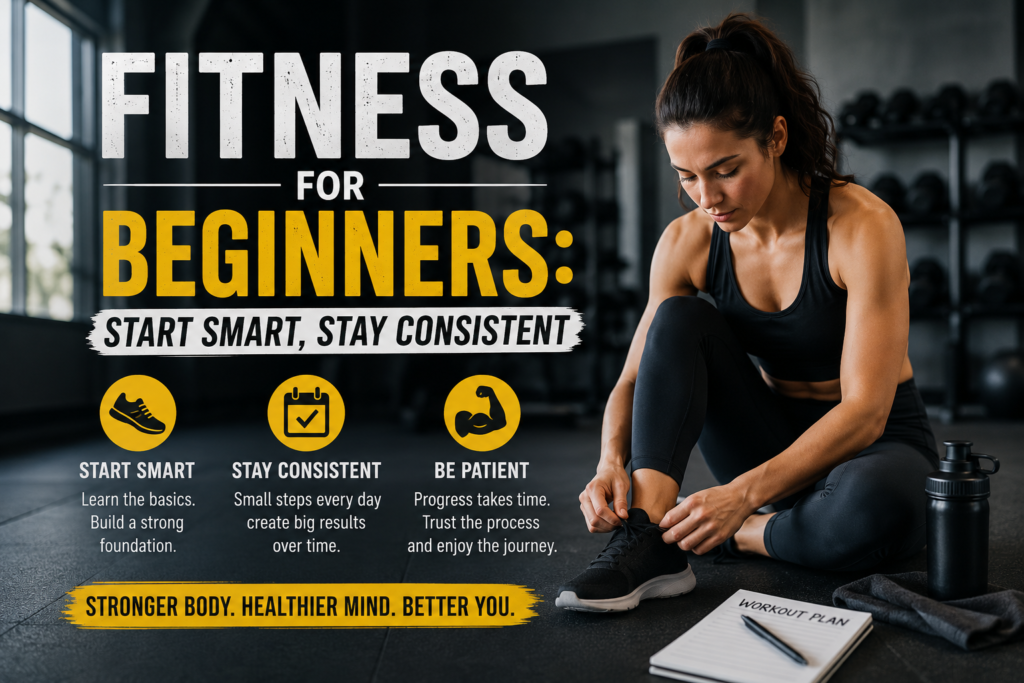
Fitness for Beginners: Start Smart, Stay Consistent
Beginning a fitness journey is one of the most powerful decisions you can make for your health, energy, and confidence. Yet many people start with enthusiasm only to stop within weeks. The reason is rarely laziness. More often, they begin with the wrong approach—too much intensity, unclear goals, or no plan for the days when motivation disappears.This guide shows beginners how to start smart and build consistency that lasts. You will learn practical steps to create a sustainable routine, avoid common traps, and turn fitness into a permanent part of your life.Understanding the Real ChallengeFitness is not about becoming a different person overnight. It is about becoming a slightly better version of yourself through repeated small actions. Beginners often fail because they treat fitness like a short-term project instead of a long-term skill.Your body adapts slowly. Strength increases gradually. Habits form through repetition. When you respect this process, progress becomes almost inevitable. When you fight against it by demanding instant results, frustration follows.The smartest beginners focus on two things: learning the basics correctly and showing up regularly. Everything else builds from there.Clarify Your Motivation and GoalsBefore choosing exercises or buying equipment, get honest about your reasons. Why do you want to get fitter? Better health? More energy for your family? Confidence in how you look and feel? Greater strength for daily life?Write your reasons down. Keep them visible. On hard days, these reasons matter more than any temporary feeling of motivation.Set goals that match your current reality. A good beginner goal might be: Complete two strength sessions and three walks each week for the next monthImprove posture and reduce daily fatigue within eight weeksBuild the habit of moving your body on most days Make goals specific and realistic. Vague wishes like “get in shape” provide little direction. Clear targets give you something concrete to measure and celebrate.Learn Fundamental Movements FirstYou do not need advanced exercises or complicated programs at the start. Focus on basic movement patterns that train your whole body safely: SquattingHinging at the hipsPushingPullingCore bracingWalking or light cardiovascular work These patterns improve strength, coordination, and joint health. Master them with bodyweight or light resistance before adding heavier loads.A simple beginner full-body session can include: Squats or chair sits – 2–3 sets of 8–12 repsModified push-ups – 2–3 sets of 5–10 repsBand or dumbbell rows – 2–3 sets of 8–12 repsGlute bridges – 2–3 sets of 10–15 repsPlank holds – 2–3 sets of 15–30 secondsBrisk walking – 10–20 minutes Perform this routine two or three times per week with at least one rest day between sessions. Move with control. Quality matters more than quantity in the beginning.If possible, learn proper form from a trusted source or a few sessions with a qualified trainer. Good technique protects your joints and makes future progress smoother.Design Habits That Support ConsistencyMotivation comes and goes. Reliable systems keep you training even when you do not feel like it.Start with a volume you can maintain. Ten to twenty minutes of focused work is far better than an ambitious hour-long session you abandon after two weeks. Success creates momentum. Momentum creates identity. Over time you begin to see yourself as someone who trains regularly.Schedule workouts the same way you schedule important appointments. Put them in your calendar. Protect that time. Morning sessions often work well because fewer distractions appear early in the day.Use habit stacking. Attach your workout to an existing routine. For example: “After I finish my morning coffee, I will complete my short strength session.” Linking new behaviors to established ones increases the chance they stick.Prepare the night before. Set out clothes, clear a small space, or pack a bag. Reducing friction removes excuses.Track more than weight. Record completed sessions, how you feel, energy levels, and strength improvements. Seeing progress in multiple areas keeps motivation alive when the scale moves slowly.Accept that perfect consistency does not exist. Missed sessions happen. The key is returning to the plan quickly instead of letting one missed day become a week or a month.Support Your Training With Sensible NutritionYou cannot out-train a consistently poor diet, but you also do not need a restrictive plan to see results. Focus on foundations: Include a source of protein at most mealsEat vegetables and fruits regularlyChoose mostly whole foodsDrink enough waterAvoid extreme calorie cuts Protein supports muscle recovery and helps you feel fuller. Vegetables provide nutrients and fiber. Whole foods deliver better energy than ultra-processed options. These simple upgrades support training without requiring perfection.Respect RecoveryMuscles grow and strengthen during rest. Sleep is one of the most powerful recovery tools available. Aim for seven to nine hours most nights. Manage stress through walking, breathing, or quiet time. Include at least one full rest day each week.Mild muscle soreness is normal when starting. Sharp joint pain is not. Learn to distinguish the two. Adjust or rest when needed. Pushing through injury often creates longer setbacks.Mistakes That Derail BeginnersSeveral patterns repeatedly stop progress:Doing too much too soon leads to burnout or injury.Constantly changing programs prevents adaptation.Comparing yourself to advanced trainees creates unnecessary pressure.Ignoring form in favor of heavier weights increases risk.Relying only on motivation instead of systems causes inconsistency.Neglecting sleep and stress management slows results.Avoiding these mistakes keeps your journey smoother and more enjoyable.Strategies for Long-Term ConsistencyEnjoyment increases adherence. Choose forms of movement you can tolerate or even like. Walking, resistance training, cycling, swimming, or recreational sports all count. The best program is the one you will actually follow.Accountability helps. Train with a friend, join a beginner class, or share your goals with someone supportive. External structure makes it harder to skip.Celebrate progress beyond the scale. Better energy, improved mood, stronger lifts, easier daily tasks, and clothes fitting differently are all meaningful wins. Acknowledge them.Prepare for obstacles. Busy weeks, travel, and low-energy days are normal. Have a short backup routine ready—something you can complete in ten minutes. Maintaining the habit in reduced form is better than stopping completely.Review your approach every four to six weeks. Increase difficulty gradually when the current level feels manageable.