Author name: priyanshutyagi674@gmail.com

Fitness Motivation

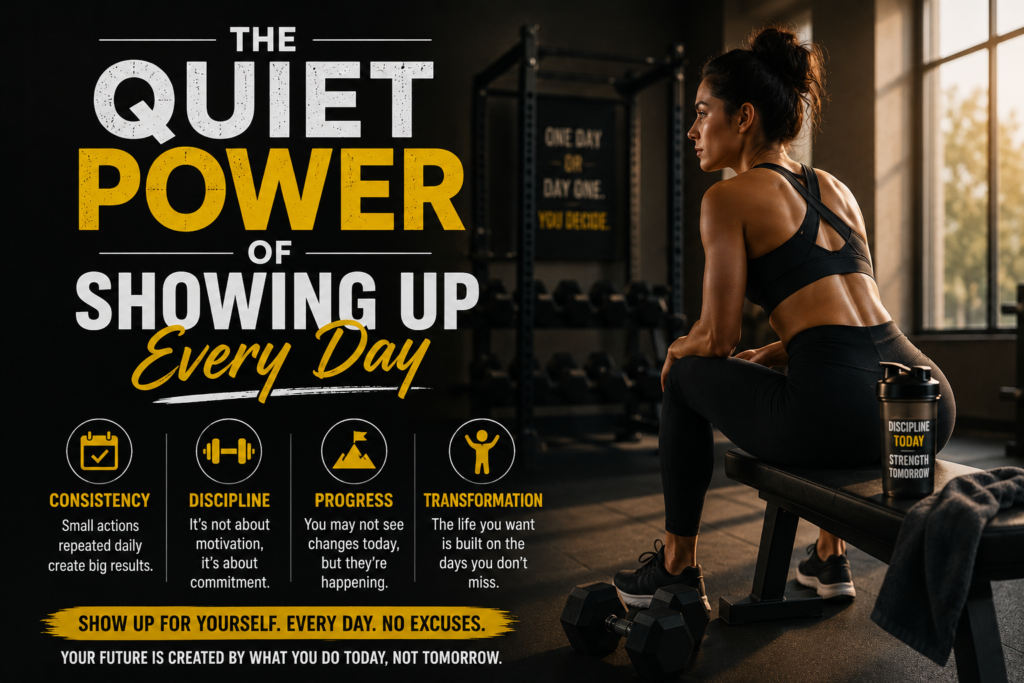
The Quiet Power of Showing Up Every Day

In a world obsessed with dramatic transformations and overnight success, the most powerful force in fitness is often the least glamorous. It is not the perfect workout, the extreme diet, or the surge of motivation that lasts a week. It is the quiet decision to show up—again and again—even when nothing feels special. Showing up every day does not mean training to exhaustion. It means protecting the habit of movement, strength, and self-respect through ordinary days, tired days, busy days, and unmotivated days. Over time, this simple act compounds into results that motivation alone can never deliver. This is the quiet power of consistency: it works slowly, steadily, and almost invisibly until one day you look back and realize how far you have come. Why Showing Up Beats Intensity Many beginners believe progress comes from hard sessions. They push themselves to exhaustion, chase sore muscles, and treat every workout like a test of willpower. For a short time this approach can produce results. Then life intervenes. Fatigue appears. Motivation fades. The intense routine collapses. Research and real-world experience both confirm the same truth: consistency outperforms intensity for long-term change. A moderate workout completed three or four times a week for months will transform a body more reliably than occasional extreme efforts followed by long breaks. Showing up builds identity. Each time you complete a session—even a short one—you reinforce the idea that you are someone who trains. Identity is stronger than motivation. When you see yourself as a person who shows up, skipping becomes the exception rather than the rule. The quiet power lies in accumulation. Strength grows through repeated stimulus and recovery. Habits form through repetition. Confidence expands with evidence of follow-through. None of these processes require perfection. They require presence. The Science Behind Daily Action Human behavior follows patterns of reinforcement. When an action is repeated in a stable context, the brain begins to automate it. What once required effort eventually becomes the path of least resistance. Sleep, stress, and recovery also improve with regular movement. Consistent training regulates energy, stabilizes mood, and supports better sleep quality. These benefits create a positive loop: better recovery makes it easier to show up, and showing up improves recovery. Progress itself is rarely linear. Strength and body composition improve in waves. Some weeks feel productive. Others feel stagnant. The people who keep showing up during the flat periods are the ones who eventually break through. Those who stop during plateaus restart from zero repeatedly. What “Showing Up” Actually Looks Like Showing up does not require a perfect gym session every day. It means protecting the minimum standard that keeps the habit alive. On strong days, you may complete a full planned workout. On average days, you follow the program as written. On hard days, you reduce the volume or intensity but still move. The key is that the habit remains unbroken. Examples of showing up in different conditions: Each of these counts. Each one protects the identity of someone who trains. Over months, the accumulation of these sessions produces visible change. Building a System That Supports Daily Presence Motivation is unreliable. Systems are not. The most consistent people design their environment and routines so that showing up becomes easier than skipping. Reduce friction. Prepare clothes the night before. Keep a simple home setup ready. Choose a training time that fits your natural energy patterns. The fewer decisions required, the higher the chance of follow-through. Start smaller than you think necessary. A ten-minute session completed consistently will outperform a sixty-minute session that happens only when motivation is high. Once the habit is stable, volume and intensity can increase gradually. Schedule it. Treat training like an important appointment. Put it in the calendar. Protect the time. When something is scheduled, it moves from optional to expected. Use implementation intentions. Decide in advance: “If it is 7 a.m., then I begin my session.” Specific plans reduce the mental negotiation that often leads to skipping. Track the act of showing up. A simple calendar or checklist that records completed sessions creates visual proof of consistency. The growing chain of marks becomes its own motivator. Plan for disruption. Travel, illness, busy seasons, and low-energy periods are normal. Decide in advance what the minimum viable session looks like during those times. Maintaining a reduced version of the habit is far better than stopping completely. Overcoming the Days You Do Not Feel Like It Every consistent person faces days when training feels unappealing. The difference is how they respond. Feelings are temporary. The decision to show up is a choice that can be made independently of mood. Many people discover that starting is the hardest part. Once the first few minutes pass, resistance often decreases. Useful strategies for low-motivation days: These approaches remove the all-or-nothing thinking that causes many people to quit after one missed day. The Compound Effect of Ordinary Days Dramatic transformations are usually the visible result of hundreds of ordinary sessions. The quiet power of showing up is that most of those sessions feel unremarkable while they are happening. One workout does not change your body. One week of consistency does not either. But repeated over months, the same simple actions produce strength, endurance, better body composition, improved posture, and greater confidence. The same principle applies beyond physical results. Showing up builds mental resilience. It teaches you that you can keep commitments to yourself. That skill transfers to work, relationships, and other areas of life. People who train consistently often report better stress management, more stable energy, and a quieter sense of self-respect. These benefits accumulate slowly and become part of daily life. Common Obstacles and How to Navigate Them Time pressure. Most people can find 20–30 minutes on most days if they protect the time and reduce non-essential activities. Short, focused sessions are highly effective for beginners and intermediate trainees. Plateaus. Progress slows at times. This is normal. Continuing to show up during flat periods allows the next wave of improvement to arrive.
Beginner Fitness

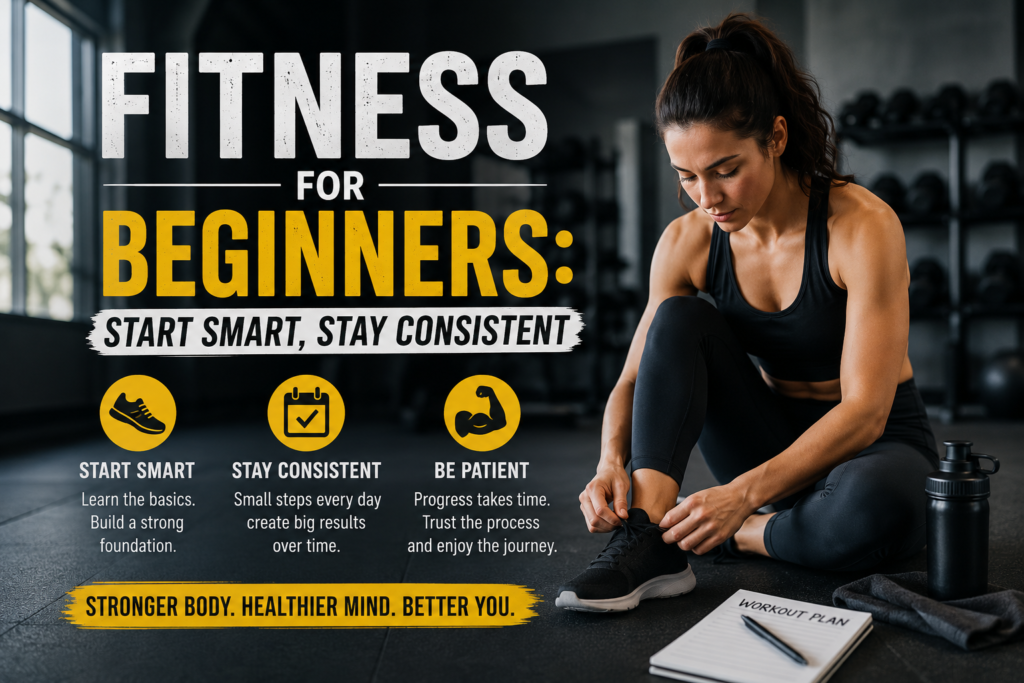
Fitness for Beginners: Start Smart, Stay Consistent

Beginning a fitness journey is one of the most powerful decisions you can make for your health, energy, and confidence. Yet many people start with enthusiasm only to stop within weeks. The reason is rarely laziness. More often, they begin with the wrong approach—too much intensity, unclear goals, or no plan for the days when motivation disappears.This guide shows beginners how to start smart and build consistency that lasts. You will learn practical steps to create a sustainable routine, avoid common traps, and turn fitness into a permanent part of your life.Understanding the Real ChallengeFitness is not about becoming a different person overnight. It is about becoming a slightly better version of yourself through repeated small actions. Beginners often fail because they treat fitness like a short-term project instead of a long-term skill.Your body adapts slowly. Strength increases gradually. Habits form through repetition. When you respect this process, progress becomes almost inevitable. When you fight against it by demanding instant results, frustration follows.The smartest beginners focus on two things: learning the basics correctly and showing up regularly. Everything else builds from there.Clarify Your Motivation and GoalsBefore choosing exercises or buying equipment, get honest about your reasons. Why do you want to get fitter? Better health? More energy for your family? Confidence in how you look and feel? Greater strength for daily life?Write your reasons down. Keep them visible. On hard days, these reasons matter more than any temporary feeling of motivation.Set goals that match your current reality. A good beginner goal might be: Complete two strength sessions and three walks each week for the next monthImprove posture and reduce daily fatigue within eight weeksBuild the habit of moving your body on most days Make goals specific and realistic. Vague wishes like “get in shape” provide little direction. Clear targets give you something concrete to measure and celebrate.Learn Fundamental Movements FirstYou do not need advanced exercises or complicated programs at the start. Focus on basic movement patterns that train your whole body safely: SquattingHinging at the hipsPushingPullingCore bracingWalking or light cardiovascular work These patterns improve strength, coordination, and joint health. Master them with bodyweight or light resistance before adding heavier loads.A simple beginner full-body session can include: Squats or chair sits – 2–3 sets of 8–12 repsModified push-ups – 2–3 sets of 5–10 repsBand or dumbbell rows – 2–3 sets of 8–12 repsGlute bridges – 2–3 sets of 10–15 repsPlank holds – 2–3 sets of 15–30 secondsBrisk walking – 10–20 minutes Perform this routine two or three times per week with at least one rest day between sessions. Move with control. Quality matters more than quantity in the beginning.If possible, learn proper form from a trusted source or a few sessions with a qualified trainer. Good technique protects your joints and makes future progress smoother.Design Habits That Support ConsistencyMotivation comes and goes. Reliable systems keep you training even when you do not feel like it.Start with a volume you can maintain. Ten to twenty minutes of focused work is far better than an ambitious hour-long session you abandon after two weeks. Success creates momentum. Momentum creates identity. Over time you begin to see yourself as someone who trains regularly.Schedule workouts the same way you schedule important appointments. Put them in your calendar. Protect that time. Morning sessions often work well because fewer distractions appear early in the day.Use habit stacking. Attach your workout to an existing routine. For example: “After I finish my morning coffee, I will complete my short strength session.” Linking new behaviors to established ones increases the chance they stick.Prepare the night before. Set out clothes, clear a small space, or pack a bag. Reducing friction removes excuses.Track more than weight. Record completed sessions, how you feel, energy levels, and strength improvements. Seeing progress in multiple areas keeps motivation alive when the scale moves slowly.Accept that perfect consistency does not exist. Missed sessions happen. The key is returning to the plan quickly instead of letting one missed day become a week or a month.Support Your Training With Sensible NutritionYou cannot out-train a consistently poor diet, but you also do not need a restrictive plan to see results. Focus on foundations: Include a source of protein at most mealsEat vegetables and fruits regularlyChoose mostly whole foodsDrink enough waterAvoid extreme calorie cuts Protein supports muscle recovery and helps you feel fuller. Vegetables provide nutrients and fiber. Whole foods deliver better energy than ultra-processed options. These simple upgrades support training without requiring perfection.Respect RecoveryMuscles grow and strengthen during rest. Sleep is one of the most powerful recovery tools available. Aim for seven to nine hours most nights. Manage stress through walking, breathing, or quiet time. Include at least one full rest day each week.Mild muscle soreness is normal when starting. Sharp joint pain is not. Learn to distinguish the two. Adjust or rest when needed. Pushing through injury often creates longer setbacks.Mistakes That Derail BeginnersSeveral patterns repeatedly stop progress:Doing too much too soon leads to burnout or injury.Constantly changing programs prevents adaptation.Comparing yourself to advanced trainees creates unnecessary pressure.Ignoring form in favor of heavier weights increases risk.Relying only on motivation instead of systems causes inconsistency.Neglecting sleep and stress management slows results.Avoiding these mistakes keeps your journey smoother and more enjoyable.Strategies for Long-Term ConsistencyEnjoyment increases adherence. Choose forms of movement you can tolerate or even like. Walking, resistance training, cycling, swimming, or recreational sports all count. The best program is the one you will actually follow.Accountability helps. Train with a friend, join a beginner class, or share your goals with someone supportive. External structure makes it harder to skip.Celebrate progress beyond the scale. Better energy, improved mood, stronger lifts, easier daily tasks, and clothes fitting differently are all meaningful wins. Acknowledge them.Prepare for obstacles. Busy weeks, travel, and low-energy days are normal. Have a short backup routine ready—something you can complete in ten minutes. Maintaining the habit in reduced form is better than stopping completely.Review your approach every four to six weeks. Increase difficulty gradually when the current level feels manageable.

Fitness Mindset

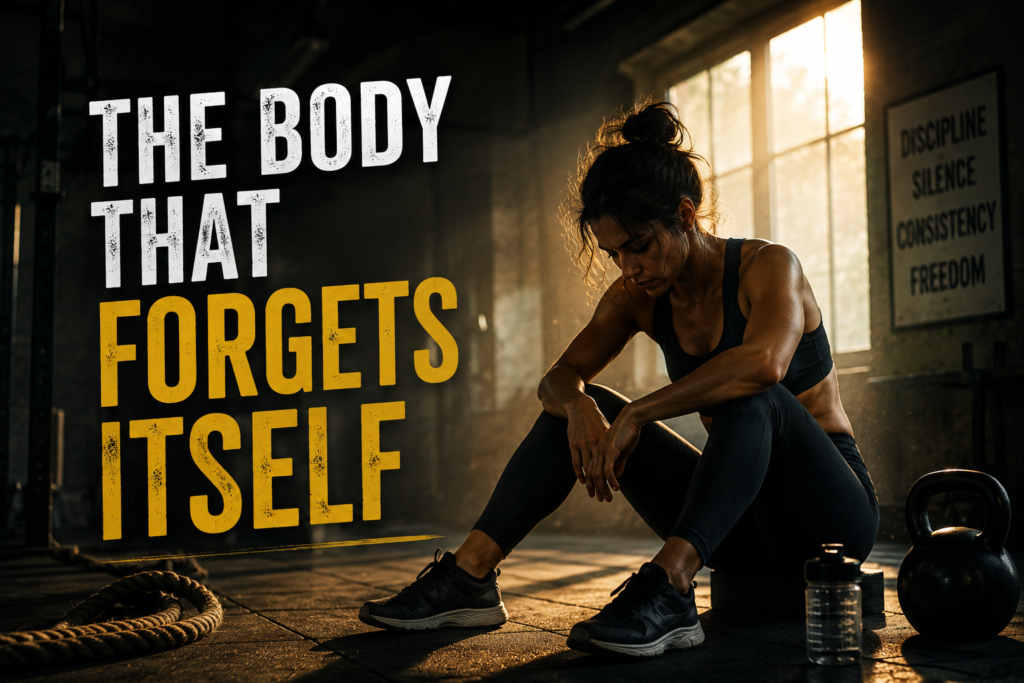
The Body That Forgets Itself

Most fitness writing trains you to watch yourself. Track the numbers. Check the mirror. Feel the burn. Monitor recovery. Adjust the variables. The body is treated as a project under constant observation, a machine that improves only when the mind is busy managing it. This approach has become so normal that almost no one questions the premise: that fitness requires relentless self-attention.This piece starts from the opposite claim. The most capable, resilient, and quietly powerful bodies are often those that have learned to forget themselves. Not through neglect, but through a different kind of relationship—one in which movement becomes so absorbed in purpose, environment, or pure action that the person no longer experiences “working out.” The body simply does what the moment requires, and the mind is elsewhere.The Cost of Constant SurveillanceModern fitness culture is built on visibility. Wearable devices count every step and heartbeat. Social media turns private effort into public proof. Gyms are lined with mirrors. Progress photos, before-and-afters, and leaderboards keep the body permanently on display—even to its owner. The result is a peculiar form of self-consciousness. People move while simultaneously evaluating how they look while moving, how the numbers are changing, and whether the effort is “working.”This split attention has consequences. When part of the mind is always measuring, the movement itself becomes secondary. The nervous system never fully settles into the action. Flow becomes harder. Enjoyment shrinks. The body is experienced as an object rather than as the quiet ground of experience. Over time, many people begin to feel alienated from the very thing they are trying to improve. They know their resting heart rate and their one-rep max, yet they feel clumsy when asked to climb a tree, carry an awkward load, or move across uneven ground without thinking.The more the body is watched, the more it seems to resist. This is not weakness. It is the natural response of a system that evolved to act, not to perform for an internal audience.Bodies That Never TrainedLook outside the fitness industry and a different pattern appears. Traditional craftspeople, subsistence farmers, dancers in living cultural traditions, and children at unstructured play often develop remarkable physical capacity without ever “exercising.” Their strength, balance, endurance, and coordination emerge as side effects of doing something else that mattered more than the body itself.A carpenter develops powerful hands and a stable core because the wood and the tools demand it. A person who walks long distances daily for practical reasons develops efficient gait without ever thinking about cadence or stride length. A child who climbs, jumps, and wrestles for hours does not count sets. The body is absorbed into the activity. Attention is outward—toward the material, the terrain, the game, the other person. The body becomes competent by disappearing into the task.This is not nostalgia for a vanished past. It is an observation about how skill and capacity actually form. When movement is subordinate to a larger purpose, the nervous system organizes itself efficiently. When movement is the purpose, the mind tends to interfere.The Paradox of TryingThere is a well-known phenomenon in performance: the more deliberately someone tries to control an automatic skill, the more it breaks down. Think of a person who suddenly becomes aware of their own walking and starts to feel awkward, or a musician who focuses on their fingers instead of the music and loses fluency. Fitness culture systematically encourages this interference. It asks people to feel every muscle, perfect every angle, and stay mindful of form at all times.For beginners learning a new pattern, some attention is necessary. Beyond that point, continued high self-monitoring often becomes counterproductive. The body already knows how to organize force, balance, and rhythm far better than the conscious mind can dictate. Excess scrutiny replaces fluid coordination with stiff, effortful control.The deeper invitation is therefore not “pay more attention to your body,” but “create conditions in which your body can stop needing your attention.”How Forgetting HappensForgetting the body does not mean ignoring it or treating it carelessly. It means allowing it to operate below the threshold of constant commentary. Several practical shifts support this:Turn movement into the means rather than the end. Carry something that needs carrying. Walk somewhere you actually need to go, even if it takes longer. Climb because the destination is higher. Dig, build, repair, or play because the activity itself has value. When the purpose is external, the body organizes around it without demanding applause or metrics.Reduce the mirrors—literal and digital. Spend periods of movement without devices that report back. Train or move in environments where your reflection is not available. Let the feedback come from the world itself: Did the bag stay balanced? Did the ground feel secure underfoot? Did the task get completed?Choose activities that pull attention outward. Games with other people, complex physical tasks that require problem-solving, exploration of unfamiliar terrain, or any form of play that is interesting for its own sake all tend to dissolve self-consciousness. The body becomes a participant rather than a spectacle.Allow inefficiency. Not every movement needs to be optimized. Some of the most useful physical development happens in awkward, imperfect, exploratory actions—reaching in unusual ways, balancing on imperfect surfaces, moving slowly when speed is not required. Efficiency is valuable when the goal is specific performance. Outside that context, a degree of inefficiency keeps the system adaptable and prevents the body from becoming locked into a narrow set of patterns.What Remains When the Watching StopsPeople who spend less time monitoring their bodies often report a surprising change. They feel more at home in movement, not less. They notice less anxiety about “missing sessions” because physical life continues regardless of formal training. They recover a sense of the body as reliable rather than fragile or perpetually incomplete. Strength and endurance still develop when the demands are consistent, but they develop as quiet background facts rather than as trophies.This does not reject all structured training. There are times when deliberate practice, progressive loading, and careful attention are exactly what is

Fitness Lifestyle

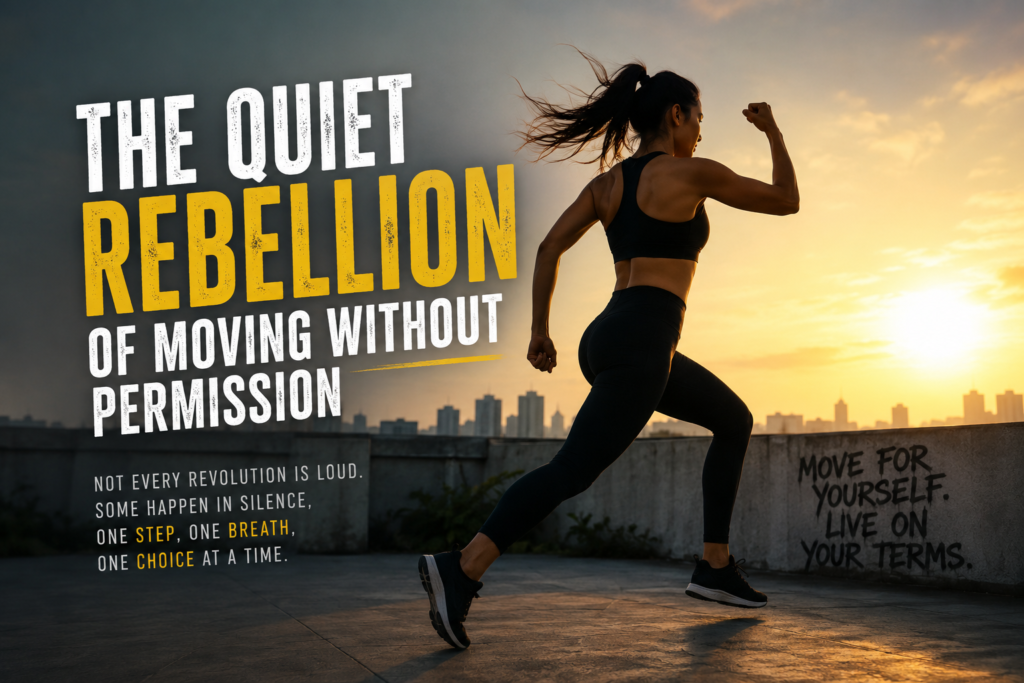
The Quiet Rebellion of Moving Without Permission

Most fitness writing treats the body like a stubborn machine that needs better fuel, tighter schedules, and louder motivation. It assumes the problem is insufficient willpower, wrong macros, or a missing six-week challenge. That framing is so common it has become invisible. This is not that kind of piece.This is about the deeper mismatch: modern life is engineered to make purposeful physical effort unnecessary, then sells us the remedy as a separate, scheduled, optimized activity called “exercise.” The result is a culture that feels constantly behind on its own body. The way out is not more efficient workouts. It is a quieter, more radical refusal of the entire premise.We Did Not Evolve to “Work Out”For nearly all of human history, movement was not optional or aesthetic. It was the price of food, shelter, safety, and belonging. You walked because the water was farther than yesterday. You carried because the child could not. You climbed, dug, ran, or sat still for hours depending on what the day demanded. Rest was earned and therefore respected. There was no separate category called fitness.Evolutionary biologists have made this point repeatedly: humans are adapted for intermittent, purposeful movement and for conserving energy when movement is not required. The modern invention of exercise—voluntary exertion performed for its own sake—is culturally recent and biologically awkward. Our brains still run an ancient cost-benefit calculation that asks, “Is this effort necessary right now?” When the answer is no, resistance appears. That resistance is not moral failure. It is an old survival circuit operating in a world where survival no longer requires it.Most fitness content ignores this. It treats the reluctance as a character flaw to be overcome with better apps, harder challenges, or more inspiring language. The result is a cycle of temporary compliance followed by quiet abandonment. People do not fail at fitness because they are lazy. They fail because the activity is designed as an optional extra in a life that already fills every hour with other demands.The Industry of Separated EffortWalk into almost any gym and you see the separation in physical form. People arrive, change clothes, perform prescribed movements that bear little resemblance to anything they will do outside the building, then leave. The body is treated as a project to be improved in isolation. Progress is measured in numbers that exist mainly inside the gym: heavier weights, faster intervals, lower body-fat percentages.This separation creates two problems. First, it makes movement feel like a transaction rather than a continuous part of living. Second, it trains people to believe that “being fit” is something that happens in designated spaces and times. Everything else—commuting, working, parenting, waiting—becomes neutral or sedentary by default. The body is either “training” or “resting from training.” There is little room for the ordinary physical competence that once defined daily life.The market thrives on this separation. If movement were woven into ordinary hours, fewer people would need to buy the specialized solutions. So the industry keeps the problem and the product in the same conceptual box: your body is insufficient unless you dedicate separate time and money to fixing it.A Different Starting PointImagine fitness not as improvement of the body but as restoration of agency inside an environment that prefers you passive. The goal is not a better aesthetic or a higher VO₂ max. The goal is to move through ordinary life with less friction and more quiet capability—carrying what needs carrying, climbing what needs climbing, walking farther than the shortest route, standing when sitting is the default, playing without turning the play into a performance metric.This shifts the question from “How do I force myself to exercise?” to “How do I redesign the small structures of my days so that movement becomes the path of least resistance rather than an added burden?”Some practical expressions of this shift look almost trivial, which is precisely why they are powerful: Choose the route that includes stairs, a slight incline, or a longer loop simply because it is available.Carry bags, children, or tools instead of immediately reaching for wheels or assistance.Work or talk while walking when the conversation does not require a screen.Sit on the floor more often. Stand to cook. Stretch while waiting for water to boil.Play games that involve running, balancing, or roughhousing without labeling them “cardio.”Make the home slightly less convenient: put frequently used items higher or lower so reaching and bending become normal. None of these require special clothing, memberships, or tracking. They also do not produce the dramatic before-and-after photos that drive engagement. They produce something quieter: a body that is used rather than merely trained.The Problem With OptimizationMuch current fitness advice is obsessed with optimization—minimum effective dose, perfect form, progressive overload, recovery protocols. Optimization is useful when the goal is specific performance. It becomes corrosive when it turns everyday movement into another domain of self-measurement and self-judgment.There is value in deliberate practice. Strength training, skill work, and structured endurance have clear benefits. But when every physical act is evaluated for efficiency or results, the joy and the incidental learning disappear. Children move for hours without needing a program because the movement is embedded in curiosity and play. Adults lose that embedding and then try to recreate the volume through willpower. The adult version usually loses.A more sustainable approach accepts inefficiency. Some days the walk is slow. Some days the carrying is awkward. Some days the only movement is the restless pacing that happens while thinking. These are not wasted sessions. They are the body remaining in conversation with its environment.What Changes When Movement Stops Being a ProjectPeople who successfully live this way often report a shift that has little to do with muscle or fat. They notice they are less anxious about “missing a workout” because the day’s movement is already happening. They recover better because they are not oscillating between extreme effort and complete stillness. They become more willing to try physical tasks outside their usual range because competence is no longer confined to the gym.The body begins

Yoga Benefits

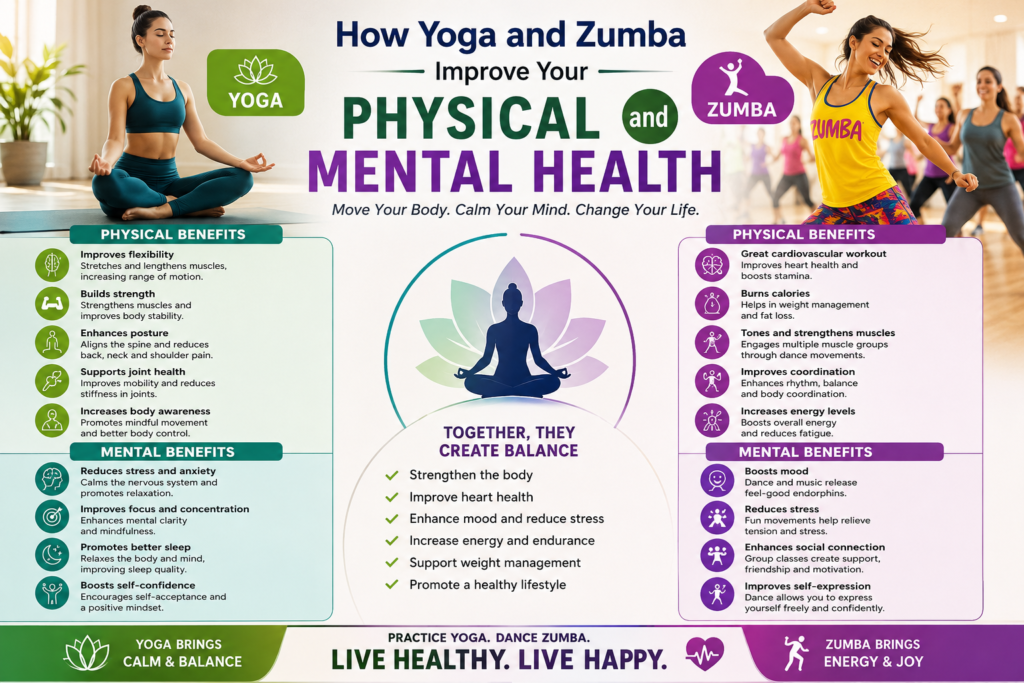
How Yoga and Zumba Improve Your Physical and Mental Health

Modern lifestyles often involve long hours of sitting, increased stress, irregular sleep, and limited physical activity. These habits can gradually affect both physical fitness and mental well-being. Fortunately, incorporating enjoyable forms of exercise into your routine can significantly improve your quality of life. Two of the most effective and popular fitness practices today are Yoga and Zumba. While Yoga focuses on mindfulness, flexibility, strength, and relaxation, Zumba combines energetic dance movements with cardio exercise to create a fun and engaging workout. Although they are different in style, Yoga and Zumba complement each other perfectly. Yoga helps calm the mind and improve body awareness, while Zumba boosts energy levels, burns calories, and strengthens the cardiovascular system. Together, they provide a balanced approach to fitness that supports overall health. Whether your goal is weight management, stress reduction, increased flexibility, or simply living a healthier lifestyle, these two fitness activities can help you achieve lasting results. This article explores how Yoga and Zumba improve both physical and mental health and why adding them to your weekly routine can transform your life. Understanding Yoga Yoga is an ancient wellness practice that originated in India thousands of years ago. It combines physical postures (asanas), breathing exercises (pranayama), meditation, and relaxation techniques to create harmony between the body and mind. Unlike traditional gym workouts that mainly focus on building muscle or burning calories, Yoga emphasizes balance, flexibility, posture, controlled breathing, and mindfulness. It encourages individuals to become more aware of their physical movements, breathing patterns, and mental state. There are many styles of Yoga, including Hatha Yoga, Vinyasa Yoga, Ashtanga Yoga, Power Yoga, Yin Yoga, and Restorative Yoga. Each style offers unique benefits, allowing people of all ages and fitness levels to find a practice that suits their needs. Understanding Zumba Zumba is a dance-based fitness program that combines aerobic exercise with exciting Latin and international music. Developed to make exercise enjoyable, Zumba transforms a workout into an energetic dance session that keeps participants motivated and engaged. Unlike repetitive cardio routines, Zumba incorporates dance styles such as salsa, merengue, reggaeton, cumbia, and hip-hop. The constantly changing movements challenge different muscle groups while improving endurance, coordination, and cardiovascular fitness. A standard Zumba class usually includes a warm-up, high-energy dance routines, muscle-conditioning movements, and a cool-down with stretching. Because the focus is on having fun, many participants find it easier to stay consistent with Zumba compared to traditional workouts. Physical Benefits of Yoga Improves Flexibility One of Yoga’s greatest strengths is improving flexibility. Tight muscles caused by sitting for long periods or lack of exercise can lead to discomfort and limited movement. Regular stretching through Yoga gradually increases flexibility, making daily activities easier while reducing muscle stiffness. Improved flexibility also supports better athletic performance, reduces the risk of injury, and enhances overall mobility. Even beginners often notice positive changes after only a few weeks of consistent practice. Builds Functional Strength Yoga uses body weight as resistance, making it highly effective for developing functional strength. Holding poses such as Plank, Warrior, Chair Pose, and Side Plank activates multiple muscle groups simultaneously. Rather than focusing only on large muscles, Yoga strengthens smaller stabilizing muscles that improve posture, balance, and coordination. Increased muscle strength also supports healthy joints and reduces the likelihood of injuries during everyday activities. Enhances Balance and Coordination Many Yoga poses require maintaining balance while controlling breathing and posture. Standing poses like Tree Pose and Eagle Pose challenge the body’s stability and strengthen the core muscles responsible for maintaining balance. Better coordination benefits people of all ages, especially older adults who wish to reduce the risk of falls and improve overall mobility. Corrects Poor Posture Modern lifestyles often encourage poor posture due to prolonged computer use and smartphone habits. Slouching places excessive pressure on the spine, shoulders, and neck. Yoga helps strengthen the back, shoulders, and core while stretching tight chest muscles. Regular practice promotes proper spinal alignment, making it easier to maintain healthy posture throughout the day. Improved posture not only reduces pain but also enhances breathing, confidence, and overall body mechanics. Supports Joint Health Gentle Yoga movements increase circulation around the joints and encourage healthy movement patterns. This helps reduce stiffness and improve mobility, especially for individuals experiencing age-related discomfort or sedentary lifestyles. By strengthening muscles surrounding the joints, Yoga also provides better support, reducing unnecessary strain during everyday movements. Physical Benefits of Zumba Improves Heart Health Zumba is an excellent cardiovascular workout that keeps the heart rate elevated throughout the session. Regular participation strengthens the heart muscle, improves circulation, and enhances the body’s ability to deliver oxygen efficiently. Better cardiovascular fitness increases stamina, making daily tasks and physical activities feel easier while supporting long-term heart health. Burns Calories Effectively One of the biggest reasons people enjoy Zumba is its ability to burn a significant number of calories while feeling more like dancing than exercising. The combination of continuous movement, changing rhythms, and energetic choreography keeps the body active throughout the class, supporting healthy weight management when combined with balanced nutrition. Promotes Healthy Weight Management Consistency is one of the most important factors in achieving fitness goals. Since Zumba is enjoyable and social, many participants remain committed to regular classes. Frequent participation helps increase daily calorie expenditure, reduce body fat, and improve body composition. Instead of viewing exercise as a chore, people begin looking forward to each session. Tones Multiple Muscle Groups Although primarily a cardio workout, Zumba also strengthens muscles throughout the body. Dance movements engage the legs, glutes, abdominal muscles, arms, shoulders, and back. The constant changes in direction, stepping patterns, and rhythmic movements help improve muscle tone while enhancing overall physical conditioning. Increases Endurance As cardiovascular fitness improves, participants notice they can exercise longer without becoming overly tired. Increased endurance benefits sports performance, outdoor activities, and everyday tasks such as climbing stairs or carrying groceries. Improved stamina also encourages a more active lifestyle beyond the fitness studio. Mental Health Benefits of Yoga Reduces Daily Stress Stress has become one of the most

Zumba

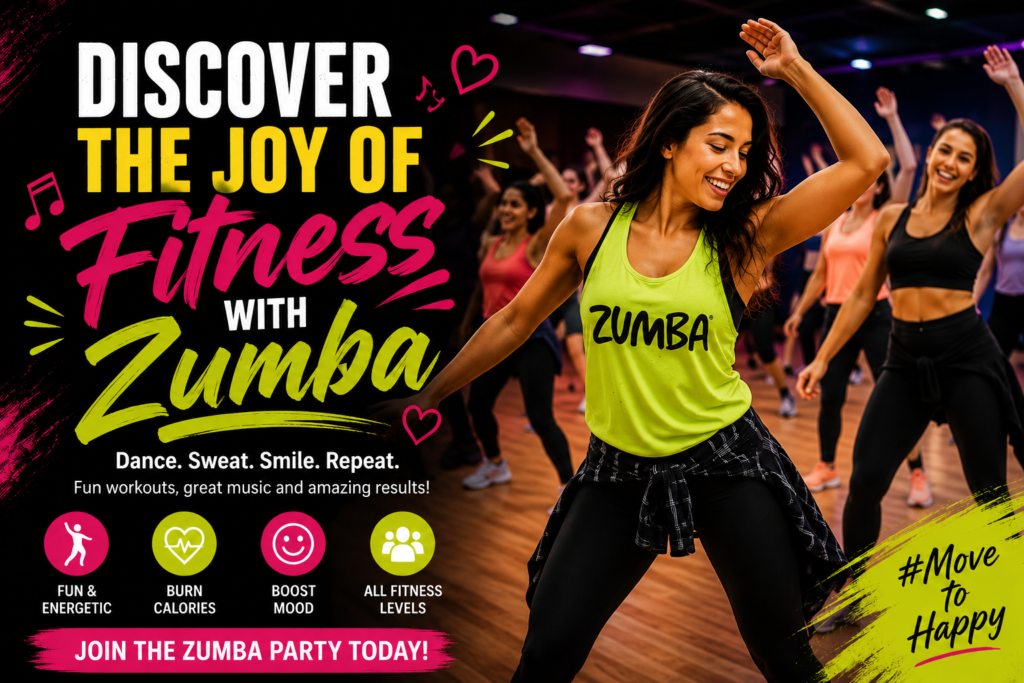
Discover the Joy of Fitness with Zumba

Fitness is not just about achieving a perfect body—it’s about living a healthier, happier, and more confident life. If you’re looking for a workout that combines exercise with excitement, Zumba is the perfect choice. At ZayanFitness, we believe fitness should be enjoyable, motivating, and accessible to everyone. Our Zumba classes are designed to help you build strength, increase energy, burn calories, and improve your overall well-being while having fun. Unlike traditional workout routines that can become repetitive, Zumba transforms fitness into an energetic dance experience. Every class is filled with upbeat music, exciting choreography, and positive vibes that keep you motivated from start to finish. Whether you’re a complete beginner or an experienced fitness enthusiast, our classes are suitable for every fitness level. What Makes Zumba Special?Zumba is a globally popular fitness program that combines dance with cardio exercises. Inspired by Latin and international music styles, it includes easy-to-follow dance moves that provide a full-body workout. Each session feels more like a dance party than a workout, making it easier to stay active and committed to your fitness goals. At ZayanFitness, our certified instructors create a welcoming environment where everyone can enjoy fitness without feeling pressured. You don’t need any dance experience—just bring your enthusiasm, wear comfortable clothes, and get ready to move. Build Strength While DancingStrength is essential for maintaining a healthy and active lifestyle. Every Zumba session naturally strengthens your muscles through continuous movement, bodyweight exercises, and energetic dance routines. Our classes help strengthen: Legs and thighsCore musclesArms and shouldersBack musclesHips and glutesAs your strength improves, you’ll notice better posture, improved balance, greater flexibility, and increased endurance. Strong muscles also help reduce the risk of injuries and make everyday activities much easier. Boost Your Energy Every DayMany people struggle with tiredness due to busy schedules and inactive lifestyles. Zumba is one of the best ways to naturally increase your energy levels. The combination of cardio exercise and uplifting music improves blood circulation and increases oxygen flow throughout your body. With regular participation, you’ll enjoy: Higher staminaBetter enduranceImproved concentrationReduced fatigueBetter sleep qualityIncreased daily productivityInstead of feeling exhausted after exercising, you’ll leave every class feeling refreshed, confident, and full of energy. Burn Calories the Fun WayLosing weight doesn’t have to be boring. Zumba offers one of the most enjoyable ways to burn calories while dancing to energetic music. A typical Zumba class can burn between 500 and 900 calories, depending on your workout intensity. Combined with healthy eating habits, regular classes help: Burn excess body fatImprove metabolismSupport healthy weight lossTone musclesMaintain a healthy body weightBecause every workout feels like a celebration, you’ll stay motivated and look forward to every session. Improve Heart HealthYour heart is one of the most important muscles in your body. Zumba is an excellent cardiovascular workout that keeps your heart healthy and strong. Regular classes help: Improve blood circulationIncrease lung capacityStrengthen the heartImprove cardiovascular enduranceSupport overall wellnessBetter heart health also means more energy, improved physical performance, and a healthier lifestyle. Reduce Stress and Feel HappierExercise is one of the most effective ways to reduce stress, and Zumba makes it even more enjoyable. The exciting music, group atmosphere, and energetic movements help release endorphins, also known as the body’s natural “happy hormones.” Regular classes can help you: Reduce stressImprove your moodIncrease self-confidenceFeel more relaxedImprove mental wellnessStay positive throughout the dayMany members say that Zumba is the highlight of their week because it helps them forget daily stress while enjoying fitness. Perfect for EveryoneOne of the biggest advantages of Zumba is that anyone can join. Our classes are perfect for: BeginnersStudentsWorking professionalsHomemakersAdultsSeniorsYou don’t need previous dance experience or advanced fitness skills. Our instructors guide you through every movement, allowing you to progress at your own pace. Improve Flexibility and CoordinationThe combination of dance movements and fitness exercises naturally improves your body’s flexibility and coordination. With consistent practice, you’ll experience: Better body balanceImproved flexibilityGreater mobilityFaster reflexesEnhanced coordinationBetter postureThese improvements benefit both your workouts and your daily life. Friendly and Motivating EnvironmentAt ZayanFitness, we focus on creating a positive community where everyone feels welcome. Our instructors encourage participants to stay motivated, enjoy the workout, and celebrate every achievement. Working out with others helps you: Stay committedMeet new friendsFeel more confidentStay motivatedAchieve long-term fitness goalsFitness becomes much easier when you’re surrounded by supportive people who inspire you every day. Why Choose ZayanFitness?Choosing the right fitness studio makes all the difference. At ZayanFitness, we provide a premium fitness experience designed to help you succeed. We Offer:Professional Zumba instructorsBeginner-friendly classesHigh-energy musicModern training environmentFlexible class schedulesSafe and hygienic studioSupportive fitness communityPersonalized guidanceOur mission is to help every member enjoy fitness while achieving real and lasting results. What Happens During a Zumba Class?Every class lasts approximately 45 to 60 minutes and includes: Warm-UpGentle stretching and light movements prepare your body for exercise. Dance CardioFun dance routines increase your heart rate and burn calories. Strength TrainingBodyweight exercises improve muscle tone and endurance. Cool DownStretching exercises relax your muscles and improve recovery. Each class delivers a complete full-body workout while keeping you entertained from beginning to end. Tips for Your First ClassIf you’re joining for the first time, here are a few helpful tips: Wear comfortable workout clothes.Use supportive sports shoes.Bring a water bottle.Arrive 10 minutes early.Follow the instructor at your own pace.Focus on enjoying the experience.Remember, progress comes with consistency, not perfection. Start Your Fitness Journey TodayThere’s no better time to invest in your health than today. Whether your goal is weight loss, better fitness, increased energy, or simply having fun while exercising, our Zumba classes provide everything you need. At ZayanFitness, we don’t just help people exercise—we help them build healthier lifestyles, stronger bodies, and greater confidence. Every class is filled with energy, motivation, and positivity, making fitness something you’ll truly enjoy. Join our Zumba Classes for Strength, Energy & Fun and experience a workout that keeps you moving, smiling, and achieving your fitness goals. Dance with confidence, build strength, boost your energy, and become the healthiest version of yourself with ZayanFitness.

Scroll to Top